

Key Takeaway
A slab leak is a leak in a water line that runs under or through a concrete floor. The usual signs are a warm spot on the floor, a water bill that climbs without explanation, the sound of running water with every fixture off, and a water meter that keeps moving when nothing is in use. EPA's WaterSense program suggests checking the meter before and after a two-hour period with no water use; if it changes at all, you probably have a leak. A plumber then isolates the hot and cold sides, pinpoints the spot through the concrete with electronic or acoustic equipment, and either repairs it through a small opening in the slab or reroutes the line above it. SKS Plumbing is open 7 days, 8am to 9pm. Call (503) 319-9348.
A slab leak is a leak in a water line that runs under or through your concrete floor, and the most reliable early signs are a warm spot on the floor, a water bill that climbs for no reason, and a water meter that keeps moving when nothing in the house is running. If you notice any of those, confirm the leak with the meter first, then have it located before anyone cuts concrete.
Many homes around Hillsboro sit over a crawl space, where a leak eventually shows itself. Slab-on-grade houses, townhomes and garage conversions are different: the supply lines run under the concrete, and a leak there can run for weeks before anything looks wrong.
The Signs of a Slab Leak
No single sign proves a slab leak, but several together are hard to ignore:
- A warm patch on the floor. A leak on the hot water line warms the concrete above it. Tile and bare feet are where people notice it first.
- A water bill that rises on its own. Same household, same habits, higher use. A slow leak runs every hour of the day.
- Running water you cannot place. A faint hiss or trickle when every tap, toilet and appliance is off.
- A water heater that seems to run constantly. If the hot side is leaking, the heater keeps replacing water you never used.
- Damp flooring, lifting laminate or a musty smell near the base of walls, with no plumbing fixture nearby.

Confirm It With the Water Meter
Before calling anyone, prove there is a leak. EPA's WaterSense program gives the simplest version of the test: "Check your water meter before and after a two-hour period when no water is being used. If the meter changes at all, you probably have a leak." (EPA WaterSense, Fix a Leak Week)
Make sure nothing is running during those two hours: no dishwasher, washing machine, irrigation or ice maker refill. If you are not sure where your meter or main valve is, our guide on how to shut off your main water valve covers both.
A moving meter tells you a leak exists. It does not tell you it is under the slab. A running toilet or a leak in a wall moves the meter just as well, so rule those out with our guide to finding a hidden water leak. If the meter moves and the toilets and visible fixtures are dry, the slab becomes a strong suspect, especially with a warm spot on the floor.
How a Plumber Pinpoints a Leak Under Concrete
Finding a slab leak is a process of elimination, then precision. At SKS Plumbing, our leak detection and repair work follows the same order every time:
- 1Confirm the leak with the meter and a pressure test on the supply system.
- 2Isolate the hot and cold sides, then individual sections, to find which line is losing pressure.
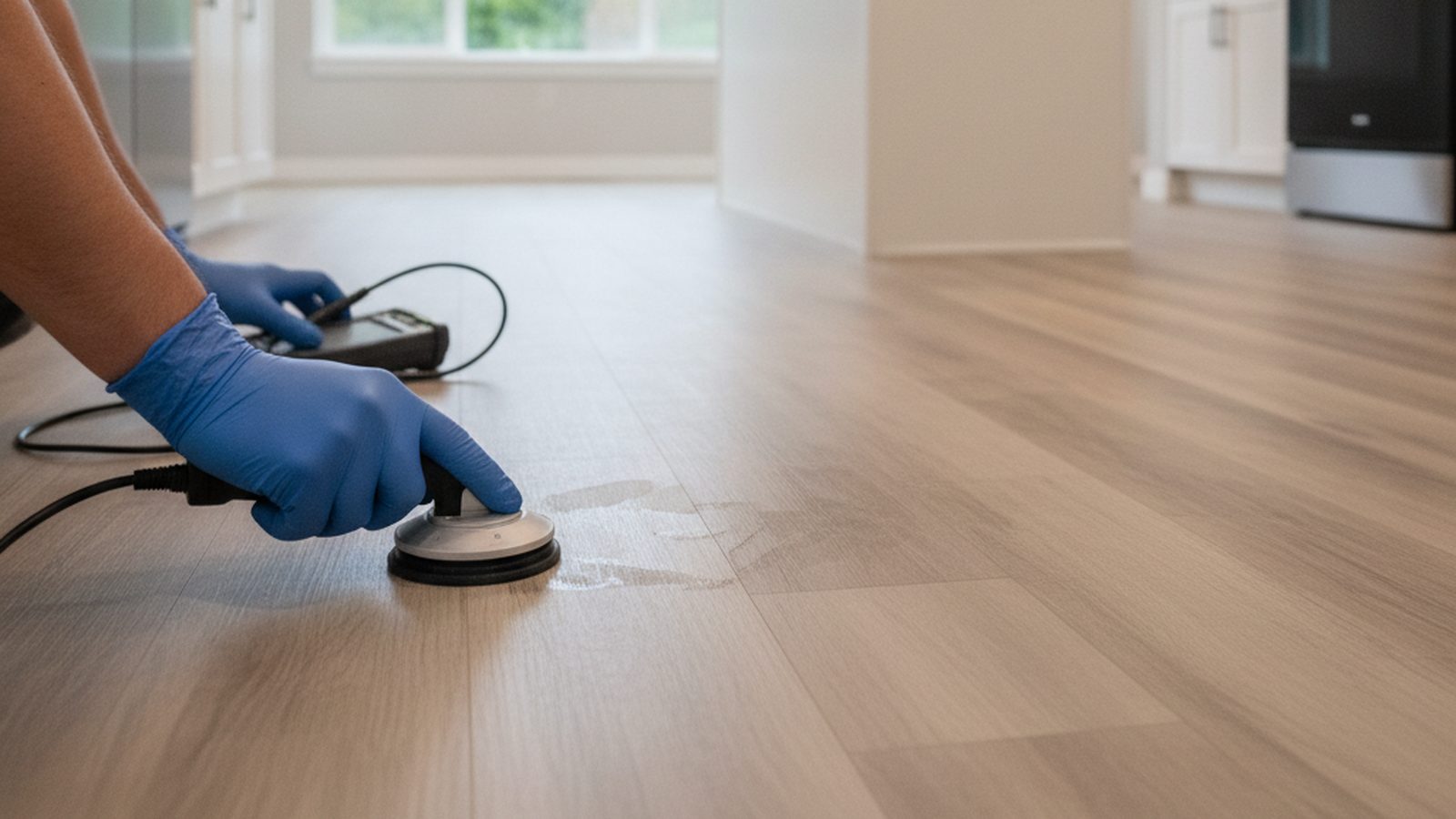
- 3Pinpoint the spot through the concrete using electronic and acoustic leak detection equipment, which picks up the sound of water escaping under pressure.
- 4Mark the floor so the only opening made is directly over the leak.
Locating a leak typically takes 1 to 3 hours. Slab leaks can take longer than a leak in an open wall, because concrete muffles the sound and the pipe route under a slab is rarely on any drawing. The point of doing this carefully is simple: guessing means breaking more concrete than you need to.
Repair Through the Slab or Reroute?
Once the leak is located, there are two main options.
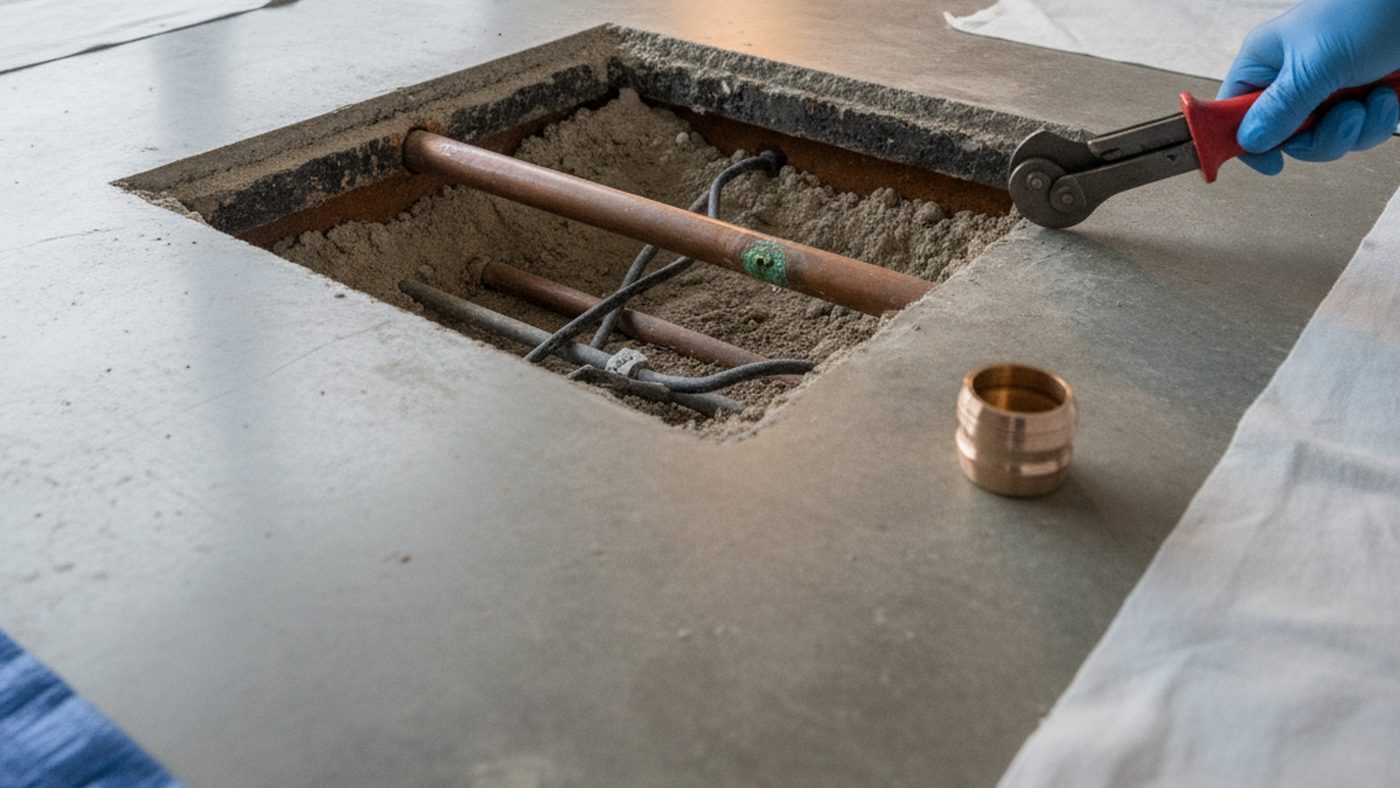
Spot repair through the slab. A small section of concrete is cut out over the leak, the damaged pipe is repaired, the line is pressure-tested, and the opening is filled. For us, this typically takes 3 to 6 hours. It makes sense when the pipe is otherwise sound and the floor above is easy to restore.
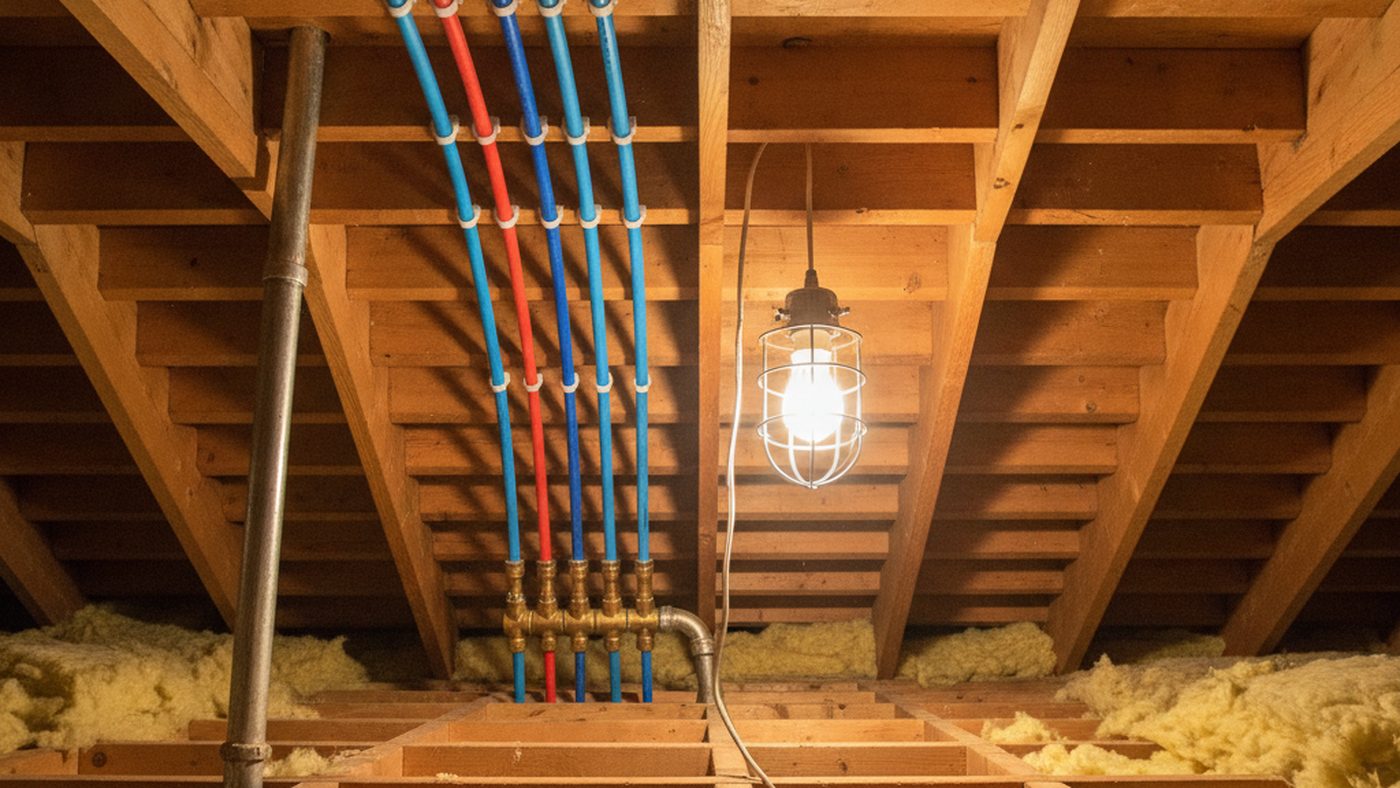
Reroute above the slab. The leaking line is abandoned and a new line is run through walls, the attic or the garage ceiling, so it never goes back under the concrete. This usually takes a full day. It is the better choice when the line has already leaked more than once, when the leak sits under expensive flooring, or when the pipe shows corrosion in more than one place.
If several lines under the slab are failing, the conversation becomes a partial or full whole home repipe instead of one repair at a time.
What to Do Right Now
If water is surfacing through the floor, shut off the main water valve and call. If the floor is dry but the meter test failed, you have time to book leak detection rather than an emergency visit, but do not leave it for months: water under a slab keeps soaking the ground beneath your foundation and flooring.
SKS Plumbing finds and repairs slab leaks across Hillsboro, Beaverton, Tigard, Tualatin, Wilsonville, Newberg and the rest of Washington County. We are open seven days a week, 8am to 9pm. Call (503) 319-9348 with your meter test result, or get in touch here.
Frequently Asked Questions
A warm or damp spot on a floor, a water bill that rises without a change in use, the sound of running water when everything is off, a water meter that moves with no water in use, and in some cases cracks in flooring or a musty smell near the base of walls. A warm spot points to the hot water line.
Use the water meter. EPA's WaterSense program suggests checking it before and after a two-hour period when no water is being used; if the reading changes at all, you probably have a leak. The meter test tells you a leak exists, not where it is. Shutting off the water heater's cold supply and repeating the test can show whether the hot side is involved.
A plumber first isolates sections of the system and pressure-tests them to confirm which line is leaking. The leak point is then pinpointed through the concrete with electronic and acoustic leak detection equipment, so the only opening made is over the leak itself.
It depends on the pipe and the location. A single leak on otherwise sound pipe is often repaired through a small opening in the slab. When the line has already leaked more than once, or the leak sits under a finished floor that is expensive to open, rerouting the line through walls or the attic usually makes more sense.
For SKS Plumbing, a spot repair through the slab typically takes 3 to 6 hours. A reroute above the slab usually takes a full day. Locating the leak comes first and typically takes 1 to 3 hours.