

Key Takeaway
A toilet that keeps running is almost always one of three parts: a worn flapper that no longer seals, a fill valve that will not shut off, or a float set so high that water spills into the overflow tube. Confirm it with the dye test — a few drops of food colouring in the tank, no flushing for 15 minutes, and colour appearing in the bowl means the flapper is leaking. The EPA notes that an old or worn flapper can cause a toilet to flush on its own or silently leak thousands of gallons a year, and that the average household's leaks account for more than 9,300 gallons wasted annually. A flapper is a homeowner-level part; a toilet that still runs after it is replaced usually has a fill valve or a flange problem. SKS Plumbing is open 7 days, 8am to 9pm — call (503) 319-9348.
A toilet that keeps running is one of the few plumbing faults that costs you money
continuously and makes almost no noise doing it. Most Hillsboro homeowners find it the
same way: the water bill climbs for no obvious reason, and only then does anyone lift
the tank lid.
The good news is that it is nearly always one of three parts, and one of them you can
replace yourself in about ten minutes.
Confirm It Is Actually Leaking
Before changing anything, prove there is a leak. The dye test takes fifteen minutes and
needs nothing but food colouring.
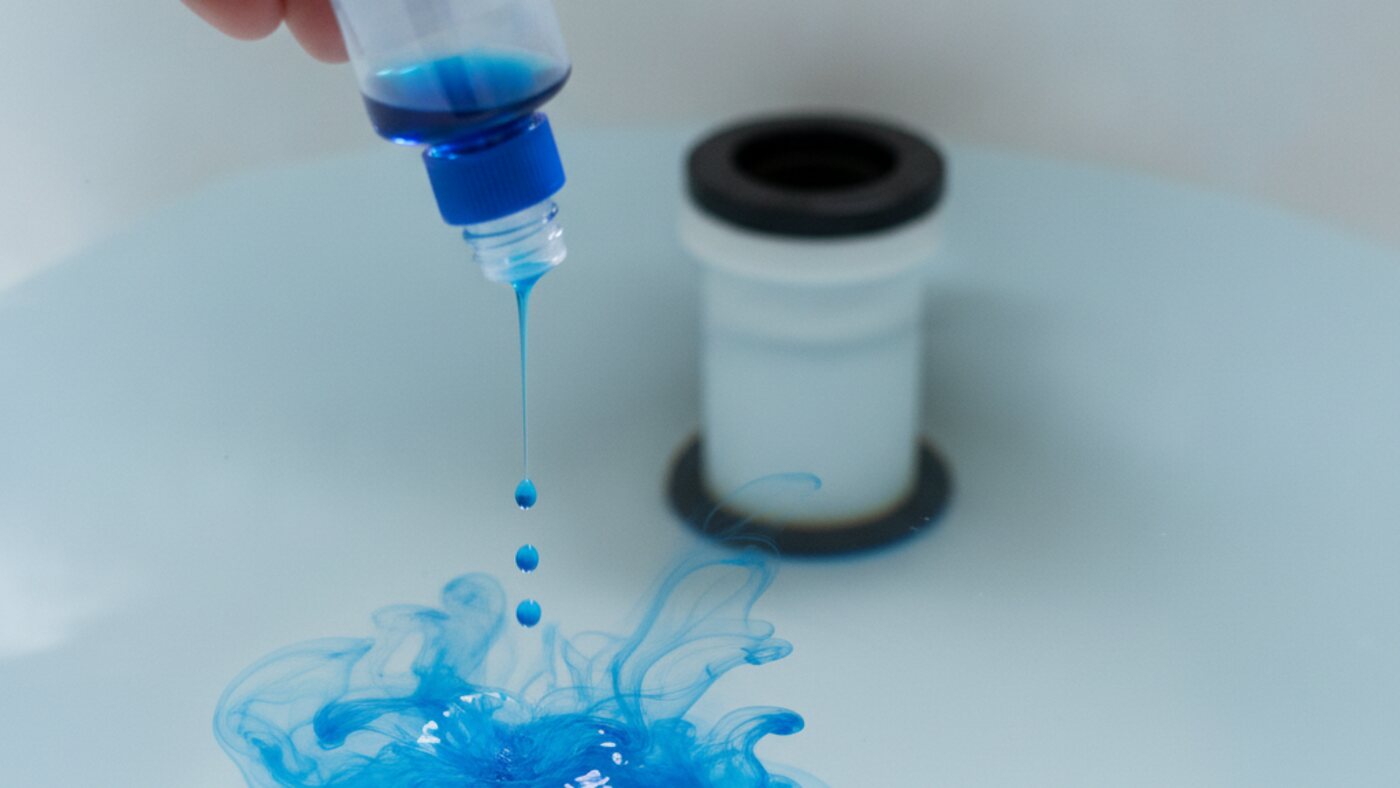
Lift the tank lid off and set it somewhere safe — they are heavy and they chip. Put a
few drops of food colouring into the tank water and stir it just enough to spread the
colour. Then leave the toilet completely alone for about fifteen minutes. No flushing,
and ask the household not to use it.
Come back and look in the bowl. If the water there has taken on the colour, water
has moved from the tank into the bowl without a flush, and the flapper is not sealing.
If the bowl is still clear, the flapper is fine and the problem is somewhere else.
This matters because a toilet that sounds like it is running is sometimes a toilet that
is refilling correctly after a slow leak somewhere else entirely. If the dye test comes
back clean and the bill is still high, the problem may not be the toilet at all, and
finding a hidden water leak is the
next thing to work through.
What It Costs to Leave It
A running toilet is not dramatic, which is exactly why it gets ignored. The numbers are
worth knowing.
The EPA's WaterSense program puts household leaks in context: **"Household leaks can
waste nearly 1 trillion gallons of water annually nationwide," and "The average
household's leaks can account for more than 9,300 gallons of water wasted every
year." It also notes that "nine percent of homes have leaks that waste 50 gallons
or more per day."**
On toilets specifically, WaterSense is direct about the part that usually fails: **"An
old or worn flapper can cause your toilet to flush on its own or silently leak
thousands of gallons a year."**
That is the whole argument for fixing it this week rather than next quarter. The part
costs very little, and the leak does not pause.
The Flapper
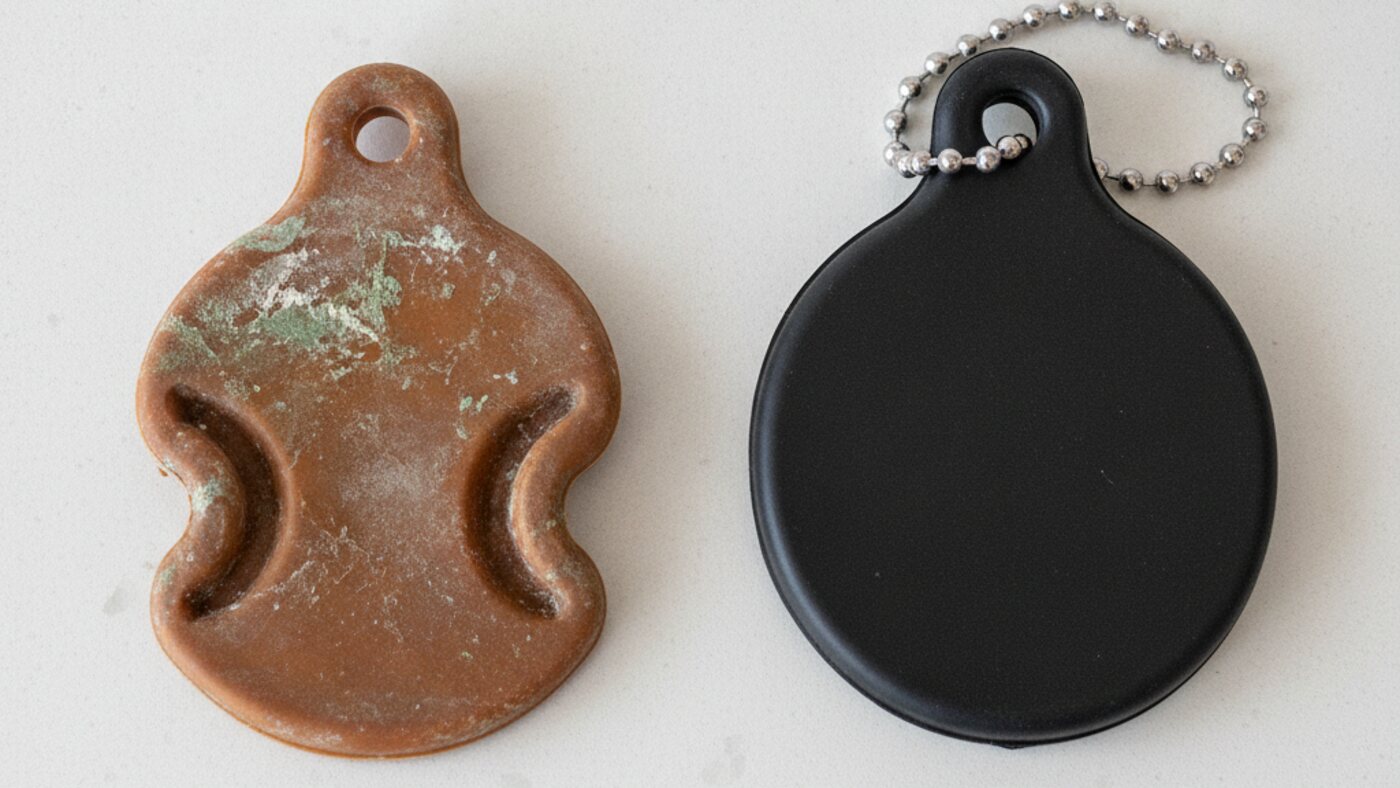
The flapper is the rubber seal at the bottom of the tank. Every flush lifts it, and it
drops back to seal the opening while the tank refills. It is a wear part — the rubber
hardens and distorts with age, and chlorine in the water supply speeds that up.
Signs it is the flapper:
- The dye test puts colour in the bowl.
- The toilet "phantom flushes" — it runs for twenty or thirty seconds on its own, hours
after anyone used it, because the tank has slowly drained and the fill valve has
kicked in to top it up.
- Jiggling the handle stops the running, which usually means the flapper is being held
slightly open by a tight or tangled chain.
Replacing one is a no-tools job. Close the supply valve on the wall behind the toilet,
flush to empty the tank, unhook the old flapper from the two ears on the flush valve
and unclip the chain from the handle arm, then fit the new one the same way.
The one thing that catches people out is fit. Flappers come in different sizes and
shapes, and one that does not seat properly on your flush valve will leak exactly like
the one you took out. Take the old flapper to the store with you rather than guessing.
The Fill Valve and the Water Level
If the dye test was clean, or you have already changed the flapper and it still runs,
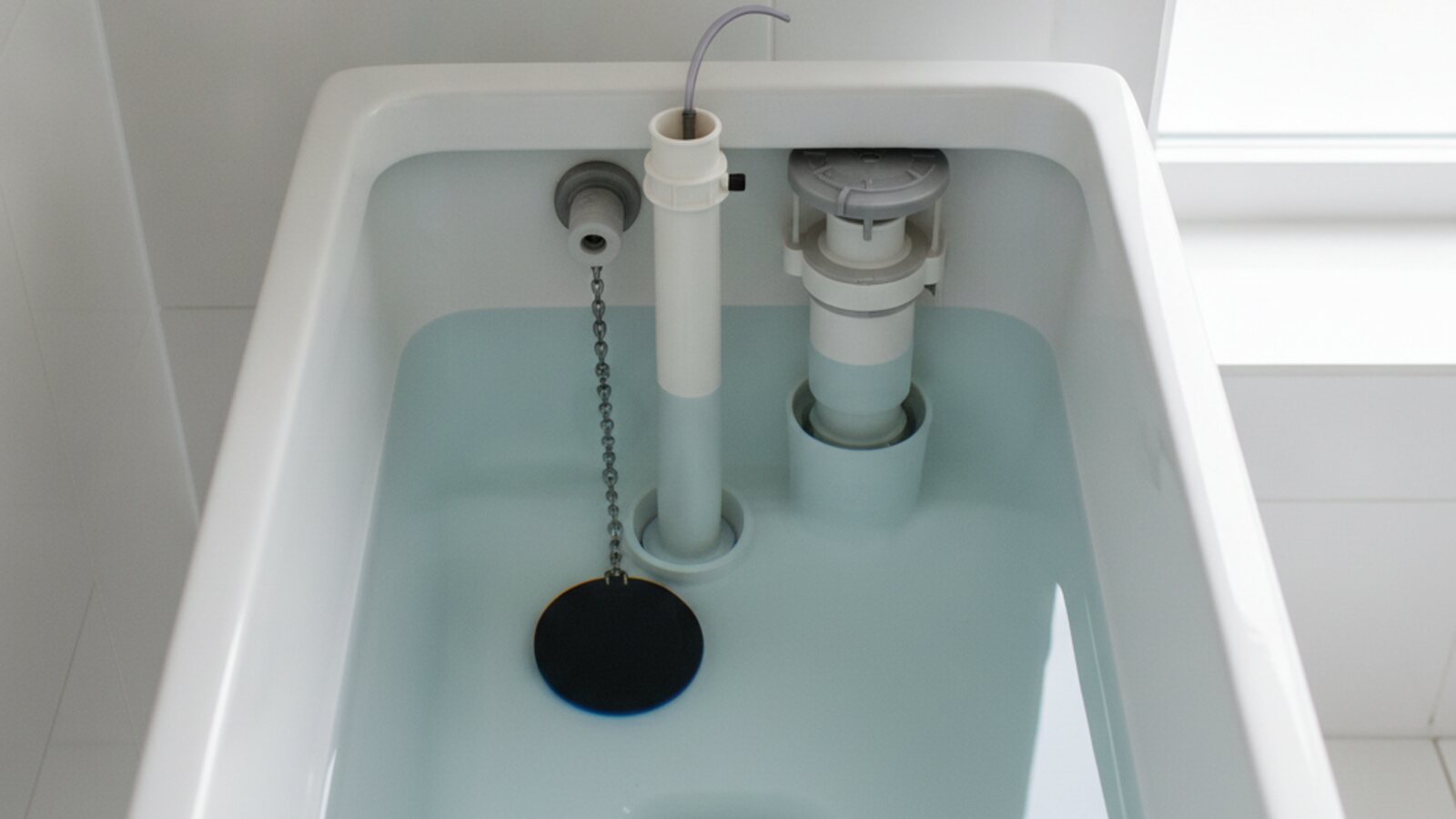
look at the tall plastic tube standing in the middle of the tank. That is the overflow
tube, and it is a safety device: if the tank ever overfills, water goes down it into
the bowl instead of over the rim onto your floor.
Take the lid off and look at where the water sits. It should be roughly half an inch to
an inch below the top of that tube. If the water is level with the top of the tube, it
is pouring down it continuously, and the fill valve will keep running because the tank
can never reach its shut-off point.
That is one of two things:
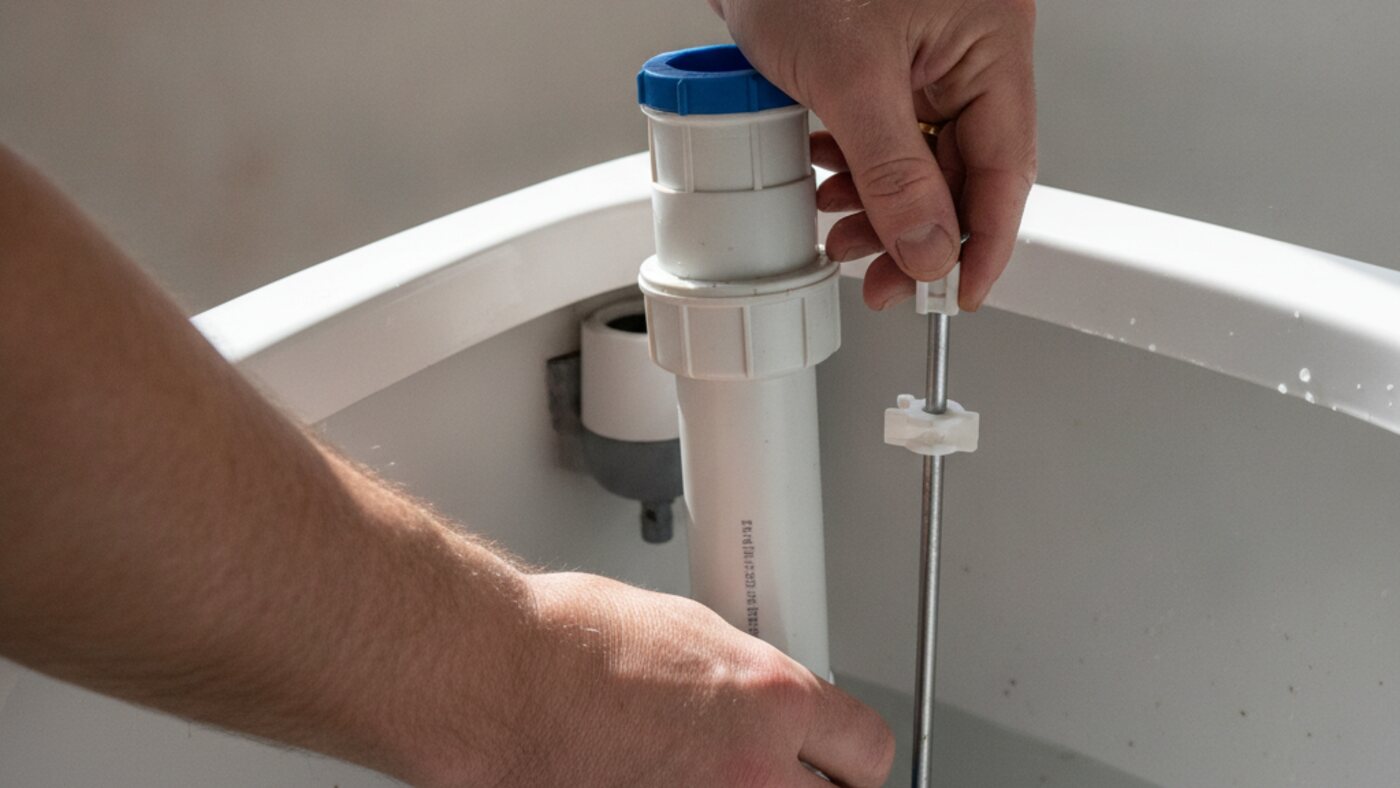
- The float is set too high. On most modern valves this is a clip on a rod or a
screw on the side of the valve. Lower it so the water settles below the overflow
tube, and the running usually stops.
- The fill valve is not shutting off. If adjusting the float does nothing, or the
valve hisses continuously, the valve itself has worn out. It is a replaceable unit
rather than a repairable one.
Both of these are ordinary bathroom plumbing work. A
fill valve swap is within reach of a confident homeowner, but it involves disconnecting
the supply line, and that is where a small job turns into a wet one if the shut-off
valve behind the toilet is old and does not fully close.
When It Is Not the Tank at All
A few running-toilet complaints turn out to be something else, and they are worth
separating out because the fix is different.
The shut-off valve behind the toilet weeps. If there is dampness at the wall
connection rather than inside the tank, the valve or the supply line is the problem, not
the flapper.
The toilet rocks slightly when you sit down. Movement breaks the wax seal
underneath and lets water escape at the base on each flush. That shows up as a damp
patch or a dark line in the flooring around the toilet, and it needs the toilet pulled
and re-set rather than any tank part.
The tank sweats in summer. Condensation on a cold tank in a humid bathroom drips
onto the floor and looks exactly like a leak. It is not one.
If you cannot place the source, that is a reasonable point to stop and have it looked
at. Leak detection and repair exists precisely
because "water is appearing and I do not know from where" is a diagnosis problem before
it is a repair problem.
The Overnight Fix
If a toilet starts running late in the evening and you would rather not deal with it
until morning, close the supply valve on the wall behind it. The tank will not refill,
the running stops, and nothing is being wasted overnight. The toilet still flushes once
on whatever is in the tank, and after that it is out of service until you open the
valve again.
That is usually the right call. A running toilet is a cost problem rather than a damage
problem, and it does not need an after-hours visit.
When to Call
Call if the toilet still runs after a new flapper and a float adjustment, if the
shut-off valve behind it will not close or weeps when you use it, if the toilet rocks or
there is any dampness around the base, or if the water bill is up and the dye test came
back clean.
SKS Plumbing is open seven days a week, 8am to 9pm, across Hillsboro and the wider
Portland metro. Call (503) 319-9348 or get in touch here and we will
tell you honestly whether it is a part you can fit yourself.
Frequently Asked Questions
Use the dye test. Take the tank lid off, put a few drops of food colouring into the tank water, then leave the toilet completely unflushed for about 15 minutes. If colour has appeared in the bowl when you come back, water is moving past the flapper and the toilet is leaking. Most tank leaks are silent, which is why they run for months before anyone notices.
Yes, because it runs around the clock. The EPA's WaterSense program states that an old or worn flapper can cause your toilet to flush on its own or silently leak thousands of gallons a year, and that the average household's leaks can account for more than 9,300 gallons of water wasted every year. Nine percent of homes have leaks that waste 50 gallons or more per day. A flapper is one of the cheapest parts in the house.
Usually yes. It is a no-tools job: shut the supply valve, flush to empty the tank, unhook the old flapper from the flush valve ears and the chain from the handle arm, and fit the replacement. The important part is matching the size and style, because a flapper that does not seat correctly leaks exactly like the one you removed. Take the old one with you to buy the replacement.
Look at the fill valve and the water level. If water is trickling into the overflow tube, the float is set too high or the fill valve is not shutting off, and the fix is adjusting the float or replacing the valve rather than the flapper. If the tank empties slowly on its own with a good flapper, the flush valve seat may be pitted or the tank-to-bowl connection may be leaking, and both are worth having looked at.
Rarely. The tank parts are consumable and designed to be replaced — flappers perish from age and from chlorine in the water, and fill valves wear out. Replacing the toilet makes sense when the bowl is cracked, when the flange underneath has failed and the toilet rocks, or when you are remodelling anyway and want a lower-flow fixture.
SKS Plumbing is open seven days a week from 8am to 9pm. A running toilet is not usually an after-hours emergency — you can stop it overnight by closing the supply valve behind the toilet and calling in the morning.