

Key Takeaway
Washing machine supply hoses sit under full water pressure every hour of every day, and when one fails it does not drip, it releases water at full flow until someone shuts it off. Replace them every five years, switch rubber hoses for braided stainless steel, and turn the valves off if the house will be empty for more than a few days. A single burst hose while nobody is home is one of the most common large water damage claims there is. Call SKS Plumbing at (503) 319-9348.
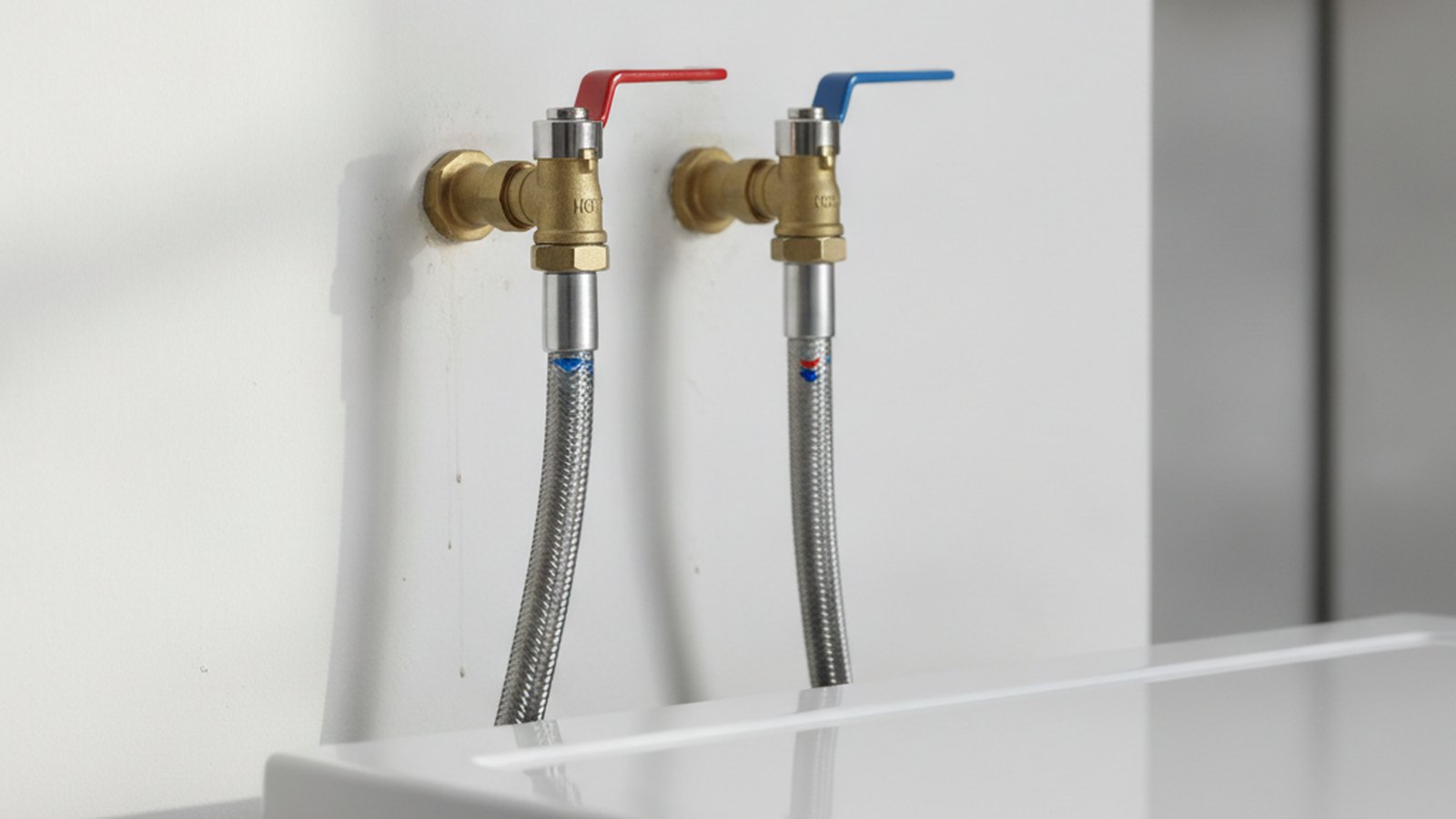
Of all the things in a house that can fail, washing machine supply hoses cause a disproportionate share of serious water damage. The reason is simple: they hold full mains pressure twenty-four hours a day, and when one lets go it does not drip. It releases water at full flow until someone turns it off.
If that happens while the house is empty, the difference between a nuisance and a five-figure insurance claim is measured in hours.
Why These Hoses Specifically
Most plumbing connections in a house are either rigid pipe or are under pressure only when something is in use. Washing machine hoses are flexible, permanently pressurised, and hidden behind a heavy appliance that nobody moves.
They also sit in a spot that gets hot and cold, they flex slightly every time the machine fills, and on rubber hoses the material degrades from the inside where you cannot see it.
The failure mode is sudden. A hose that looked fine last month splits along a seam or blows off at the fitting.
What to Look For
Pull the machine out once a year, which is the only genuinely difficult part of this job, and check for:
- Bulging anywhere along the hose, particularly near the fittings
- Rust or corrosion at the crimped metal ends
- Cracking or brittleness in the rubber
- Any weeping at the connections
- Kinks, which happen when a machine is pushed back too far against the wall
- Date stamps, if the hoses have them
Kinking deserves a mention because it is self-inflicted and common. Leave a few inches of clearance behind the machine so the hoses curve rather than fold.
Replace Them on Schedule
Every five years, regardless of appearance. They cost very little, and the failure they prevent is one of the most expensive things that happens to a house.
Use braided stainless steel rather than plain rubber. The braid does not make the hose immortal, but it is considerably more resistant to splitting and it fails less catastrophically.
Replace both at once. There is no sense in replacing one and leaving a hose of the same age on the other connection.
Shut-Off Valves Are the Other Half
Behind most machines there are two valves, hot and cold. In practice almost nobody turns them off, because reaching behind a washing machine twice a load is not realistic.
A single lever valve, which shuts both at once from the front, changes that calculation entirely. It is an inexpensive upgrade and it is the one that actually gets used.
At minimum, shut the water off when the house will be empty for more than a few days. The scenario behind most severe laundry room claims is a hose failing on day two of a week away.
If you do not know where your main shut-off is, our post on shutting off the main water valve covers finding it and testing that it works.
The Drain Side
Supply hoses cause the dramatic failures. The drain causes the recurring ones.
A washing machine discharges a lot of water fast, so it finds a partially blocked line before any other fixture does. Lint, detergent residue and grease accumulate in the standpipe and the branch line. Backing up during the drain cycle is usually that, rather than the machine.
If it backs up repeatedly, or if other drains gurgle when the machine empties, the problem is further down the line and needs clearing properly rather than plunging. Our post on finding a hidden water leak covers the meter test for confirming water is escaping somewhere.
Also check that the drain hose is properly secured in the standpipe. A hose that works its way out during a spin cycle empties a full drum onto the floor.
Small Things Worth Doing at the Same Time
Check the floor beneath and behind the machine for staining, which indicates a slow leak you have not noticed. Make sure the machine is level, because an unlevel machine walks during spin cycles and stresses every connection. Consider a drain pan, which handles drips and small leaks even though it will not contain a burst hose.
A leak detector with a shut-off valve is worth considering in a laundry room on an upper floor, where a failure has further to travel.
Talk to a Licensed Plumber
SKS Plumbing handles laundry room plumbing and emergency plumbing across Hillsboro and the Portland metro area. Call (503) 319-9348.
Frequently Asked Questions
Every five years is the common recommendation, and many manufacturers say the same. Replace them sooner if you see bulging, rust at the crimped fittings, cracking, or any weeping. Braided stainless steel hoses last longer than plain rubber ones and are inexpensive, so there is little reason to keep rubber ones in service.
It is worth doing if the house will be empty for more than a few days, and some people shut them off after every load. The practical compromise is a single lever valve that shuts both hot and cold at once, which is far more likely to actually get used than two separate taps behind the machine.
It catches slow leaks and drips from the machine itself and, where it is plumbed to a drain, carries them away rather than into the floor. It helps with small leaks. It will not contain a burst supply hose, which releases far more water than a pan holds, so a pan is a useful addition rather than a substitute for good hoses.
A washing machine discharges a large volume of water quickly, so it tends to find a partially blocked drain line before anything else in the house does. Lint, detergent residue and grease build up in the standpipe and branch line. If it backs up repeatedly, the line needs clearing rather than plunging, and if other fixtures gurgle at the same time the problem is further down the main line.