Key Takeaway
If your Hillsboro home has galvanized steel or polybutylene pipes, persistent low water pressure at multiple fixtures, rust-colored water, or recurring leaks in different locations, your plumbing system is failing systemically. Proactive repiping on your schedule costs less and causes less damage than waiting for a catastrophic failure.
If your Hillsboro home was built before 1990, there is a reasonable chance your water supply lines are approaching, or have already passed, their expected lifespan. The pipes running through your walls, under your floors, and through your crawl space have been working nonstop for decades, carrying pressurized water to every faucet, shower, toilet, and appliance in your home. Eventually, every pipe material fails. The question is whether you catch the warning signs early enough to plan a controlled replacement or whether you discover the problem through a catastrophic failure that floods your home.
This article covers the five most reliable indicators that your home needs a whole home repipe rather than continued spot repairs. If you recognize multiple signs on this list, it is time to schedule a professional assessment.
Sign 1: Persistent Low Water Pressure Throughout the House
Low water pressure at a single fixture usually indicates a localized problem such as a clogged aerator, a partially closed valve, or a kinked supply line. Low water pressure at multiple fixtures throughout the house points to a systemic issue with your main supply lines.
In homes with galvanized steel pipes, low pressure develops gradually over years as internal corrosion narrows the pipe diameter. Galvanized pipes corrode from the inside out. Rust and mineral deposits accumulate on the interior walls of the pipe, progressively reducing the space available for water flow. A pipe that started with a three-quarter inch internal diameter may have effectively narrowed to a quarter inch or less after 40 to 50 years of service.
This pressure loss is often most noticeable when multiple fixtures run simultaneously. You turn on the shower and the pressure seems acceptable, until someone flushes a toilet or starts the dishwasher, and your shower drops to a trickle. This happens because the corroded pipes cannot deliver enough volume to supply multiple fixtures at once.
If you have noticed a gradual decline in water pressure over the past several years, not a sudden drop but a slow deterioration, internal pipe corrosion is the most likely cause. No amount of cleaning, flushing, or valve adjustment will restore pressure in corroded pipes. The only permanent solution is replacing the pipes.
What This Looks Like in Hillsboro Homes
Many homes in established Hillsboro neighborhoods near Shute Park, downtown, and the Jackson School area were built in the 1950s through 1970s with galvanized steel supply lines. These pipes are now 50 to 70 years old, well past the 40-year expected lifespan of galvanized steel. If you live in one of these neighborhoods and have noticed declining pressure, corrosion is almost certainly the cause.
Sign 2: Rust-Colored or Discolored Water
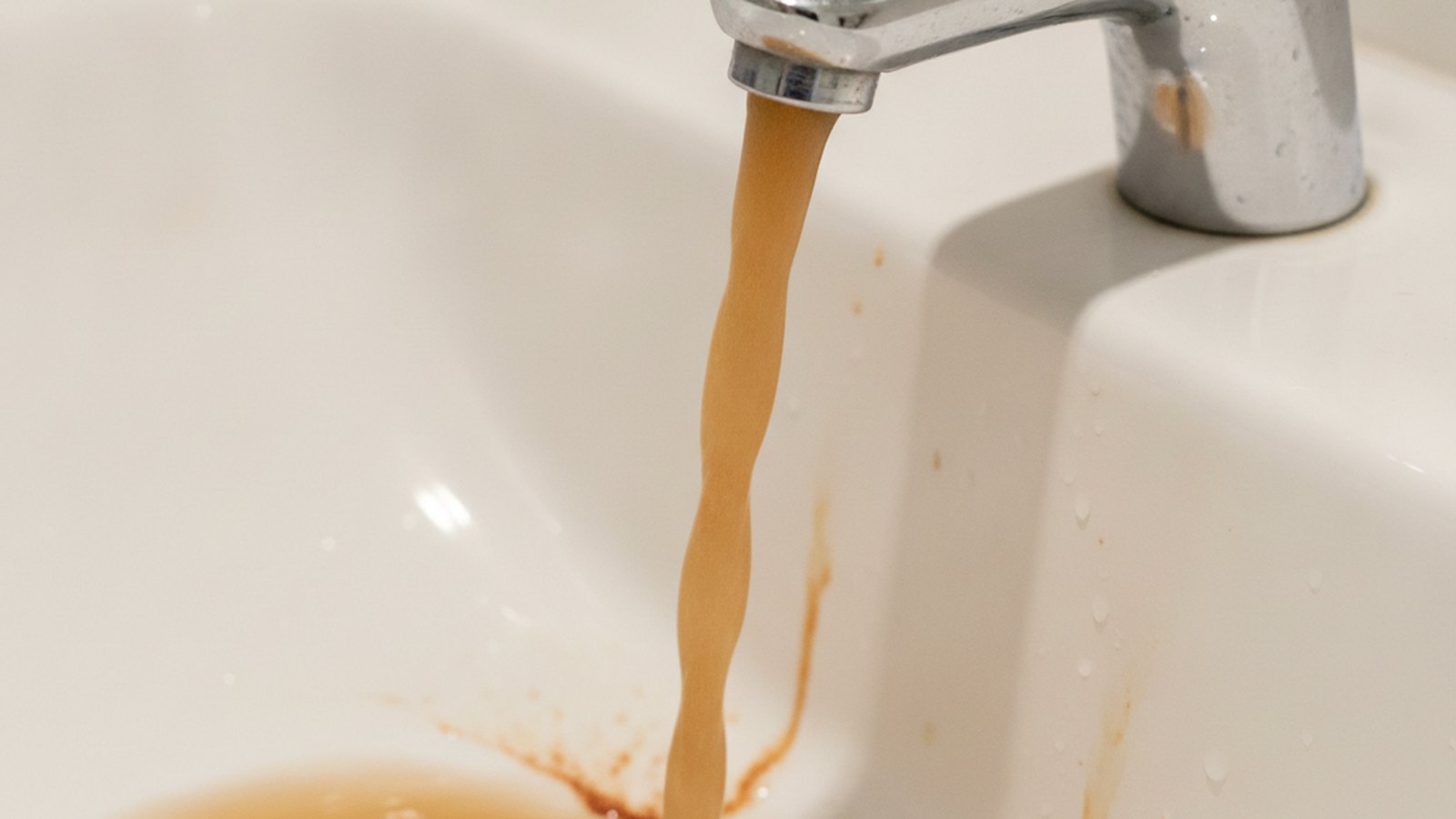
When you turn on a faucet, particularly first thing in the morning after water has been sitting in the pipes overnight, and the water comes out brown, orange, or rusty, you are seeing the interior of your pipes dissolving into your water supply.
Rust-colored water from a single faucet may indicate a problem with that specific fixture or the short supply line feeding it. Rust-colored water from multiple faucets throughout the house, especially noticeable at the hot water side, indicates widespread internal pipe corrosion. The discoloration is literally rust particles breaking free from the deteriorating pipe walls and flowing out with your water.
This is not just a cosmetic issue. Heavily corroded pipes are structurally weakened and prone to sudden failure. The same corrosion causing discolored water is also thinning the pipe walls, making leaks and bursts increasingly likely. Additionally, while the rust itself is not typically a health hazard in small amounts, it indicates a pipe system that is actively deteriorating and will eventually fail.
If running the water for 30 seconds to a minute clears the discoloration, your pipes still have some functional life remaining but are clearly deteriorating. If the water never fully clears or the discoloration has become more frequent and severe over time, the corrosion is advanced and repiping should be prioritized.
What This Looks Like in Hillsboro Homes
The Joint Water Commission supplies clean, treated water to Hillsboro homes. If your water is discolored, the problem is between the meter and your faucets, meaning your pipes are the source. Homes with galvanized steel pipes in older Hillsboro neighborhoods commonly experience this issue, particularly during winter months when temperature changes cause pipe walls to expand and contract, dislodging more rust particles.
Sign 3: Multiple Leak Repairs in Different Locations
A single pipe leak is a repair. Two leaks in the same general area might be a coincidence or a localized weak section. But when you have had leaks repaired in multiple different locations throughout your home, such as a joint in the basement, a connection in the upstairs bathroom, and a pinhole in the kitchen wall, you are seeing a pattern of system-wide deterioration.
Each individual leak repair addresses the specific failure point, but it does not address the underlying cause: the entire pipe system is aging and deteriorating at roughly the same rate throughout the house. The spots that have already leaked were simply the weakest points that failed first. The rest of the system is in similar condition and will continue producing failures at an accelerating rate.
There is a financial tipping point where continued spot repairs become more expensive than a full repipe. Each repair involves a service call, diagnosis, access (often cutting into walls or ceilings), the repair itself, and restoration of the access point. After three or four repairs, you have often spent enough on individual fixes to have covered a significant portion of a full repipe, and you still have aging pipes throughout the rest of the house waiting to fail.
The Math on Spot Repairs vs. Repiping
Consider this scenario common in Hillsboro homes: you pay for a leak repair including drywall patching. Six months later, another leak in a different location requires the same process. A year after that, a third leak. Each repair costs several hundred dollars including restoration. After the third or fourth repair, you have spent a substantial amount with no improvement to the overall system condition. A full repipe addresses every pipe in the house at once, eliminates the risk of future failures, and often costs less than the cumulative total of continued spot repairs over the next 5 to 10 years.
Sign 4: Your Home Has Galvanized Steel or Polybutylene Pipes
Some pipe materials have known failure modes that make repiping a matter of when, not if.
Galvanized steel pipes were the standard for residential plumbing from the 1930s through the late 1960s. They have a zinc coating that protects against corrosion, but this coating wears away over time, exposing the steel underneath to water contact. Once the zinc is gone, the steel corrodes rapidly. Galvanized pipes have an expected lifespan of 40 to 50 years. Any galvanized pipes still in service today are 55 to 90+ years old, significantly past their design life.
Polybutylene pipes were installed in homes from approximately 1978 through 1995. They were marketed as a cheaper, easier-to-install alternative to copper. However, polybutylene reacts with chlorine and other oxidants in treated water supplies, causing the pipe material to become brittle and crack from the inside out. Polybutylene failures are often sudden and catastrophic. The pipe looks fine externally but has deteriorated internally to the point of bursting without warning. These pipes are gray or blue flexible plastic, typically found in crawl spaces and wall cavities.
If your home has either of these materials, repiping is not a question of whether the system will fail. It is a question of whether you replace it proactively on your schedule or reactively after a flood.
Identifying Your Pipe Material
You can often identify your pipe material by looking at exposed pipes in your crawl space, basement, or utility area. Galvanized steel pipes are silver-gray when new but develop a rough, crusty, dark gray appearance with age. They are magnetic, so a magnet will stick to them. Polybutylene pipes are gray or blue flexible plastic, typically with copper or plastic fittings at connection points. If you are unsure what material your home has, a plumber can identify it during a brief inspection.
Sign 5: Your Home Is Over 50 Years Old and Has Never Been Repiped
If your home was built before 1975 and still has its original plumbing, the supply lines are at minimum 50 years old. No residential pipe material is designed to last indefinitely. Even copper, the longest-lasting common residential pipe material, has a typical lifespan of 50 to 70 years depending on water chemistry and installation quality.
A home that has never been repiped and is over 50 years old is operating on borrowed time regardless of whether you are currently experiencing symptoms. The pipes may still be functional today, but they are in the final stage of their service life. Proactive replacement allows you to schedule the work at your convenience, choose your preferred pipe material, and avoid the emergency scenario of a catastrophic failure flooding your home when you are at work or on vacation.
The Advantage of Proactive Repiping
Emergency repiping after a catastrophic failure costs more than planned repiping for several reasons. Emergency work requires immediate response regardless of scheduling. Water damage restoration adds thousands to the total cost. Insurance deductibles apply to water damage claims. Temporary housing may be needed if the damage is severe. And the stress of dealing with a flooded home, insurance claims, and restoration contractors simultaneously is significant. Proactive repiping eliminates all of these risks.
What to Do If You Recognize These Signs
If you identified one or more of these signs in your home, the next step is a professional assessment. A qualified plumber can inspect your exposed pipes, identify the material, assess the condition, and provide a clear recommendation on whether repiping is needed now or can be monitored for a period.
SKS Plumbing LLC provides free repiping assessments for Hillsboro homeowners and surrounding communities. We inspect your system, explain what we find in plain language, and provide a detailed written estimate if repiping is recommended. We offer both PEX and copper repiping options and complete most whole home repipes in 1 to 3 days.
Call (503) 319-9348 to schedule your whole-home repiping assessment. We are available 7 days a week from 8am to 9pm.
Frequently Asked Questions
Most whole home repipes for standard 2 to 4 bedroom homes are completed in 1 to 3 days. Smaller homes with accessible crawl space routing may be done in a single day. You will have running water restored by the end of each work day.
We offer both PEX and copper repiping options. PEX is more affordable, faster to install, and resistant to corrosion. Copper offers maximum longevity. We recommend the best option based on your home layout and budget.
Look at exposed pipes in your crawl space, basement, or utility area. Galvanized steel pipes are silver-gray when new but develop a rough, dark gray appearance with age and are magnetic. Polybutylene pipes are gray or blue flexible plastic. If unsure, a plumber can identify the material during a brief inspection.
Standard homeowners insurance typically does not cover repiping as a maintenance item. However, if a pipe burst causes water damage, the resulting damage may be covered. Proactive repiping eliminates the risk of a catastrophic failure and the associated insurance claims.
Repiping cost depends on home size, number of fixtures, pipe material selected, and accessibility. SKS Plumbing provides a complete fixed-price quote after assessment. The price we quote is the price you pay. Call (503) 319-9348 for a free assessment.