

Key Takeaway
Water under a kitchen sink comes from one of four places: the drain connections, the supply lines and shutoff valves, the faucet, or the garbage disposal and dishwasher hose. Dry everything, then test each part on its own and watch for the first drop. A leak that appears when nobody is using the sink is on the pressurized supply side and should be shut off at the angle stop right away. In a crawl-space home, check the subfloor under the cabinet too. Call SKS Plumbing at (503) 319-9348 for anything that will not stop with a hand-tightened nut.
When a kitchen sink is leaking underneath, the water is almost always coming from one of four places: the drain connections, the hot and cold supply lines, the faucet, or the garbage disposal and dishwasher hose. The fastest way to tell which is to dry everything, then run each part on its own and watch for the first drop.
That order matters because water travels. A drip that lands at the back of the cabinet can start at the faucet and run down a supply line before it falls, so where the puddle sits tells you very little. The test below tells you a lot.
Start Dry: The Paper Towel Test
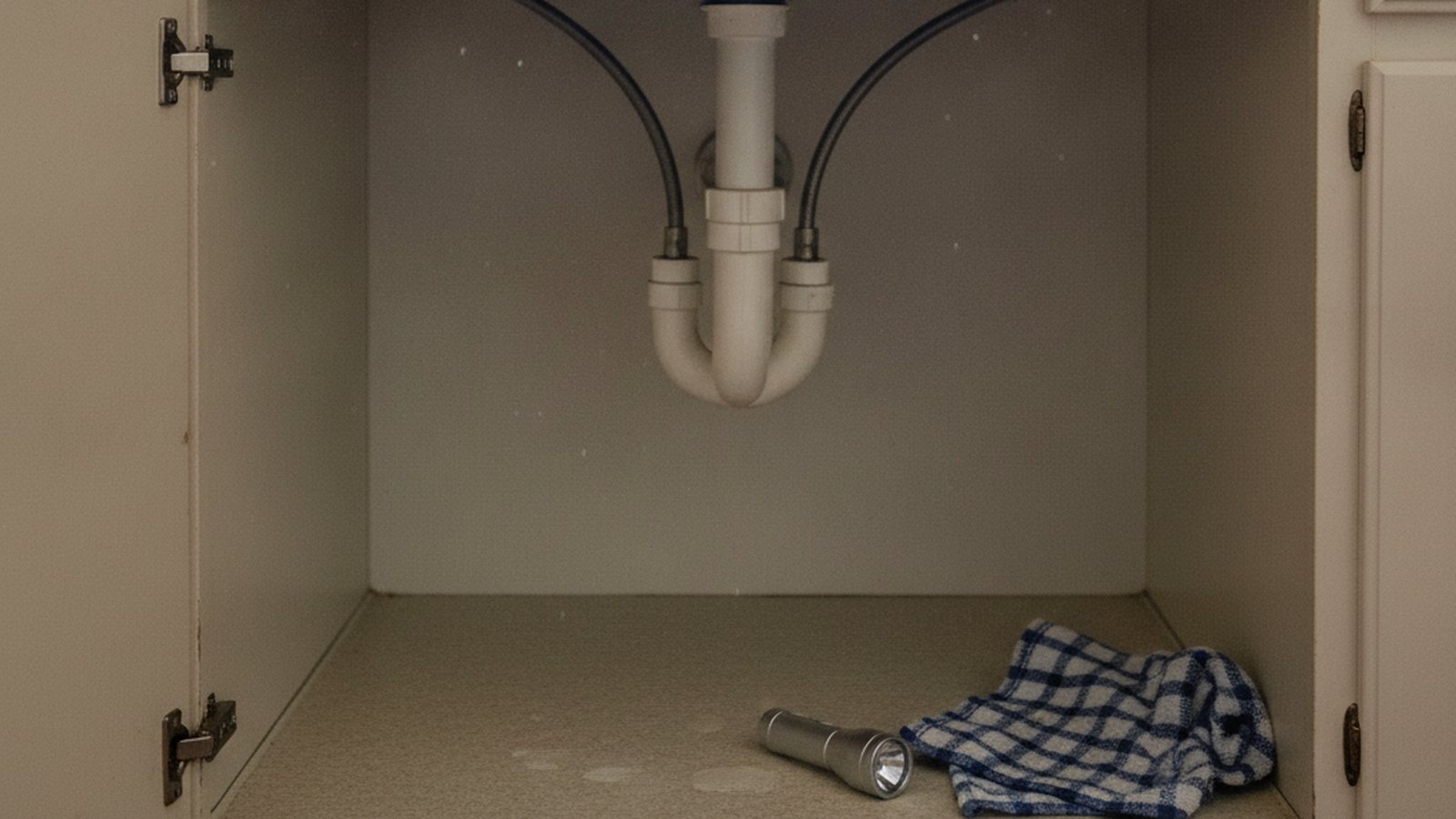
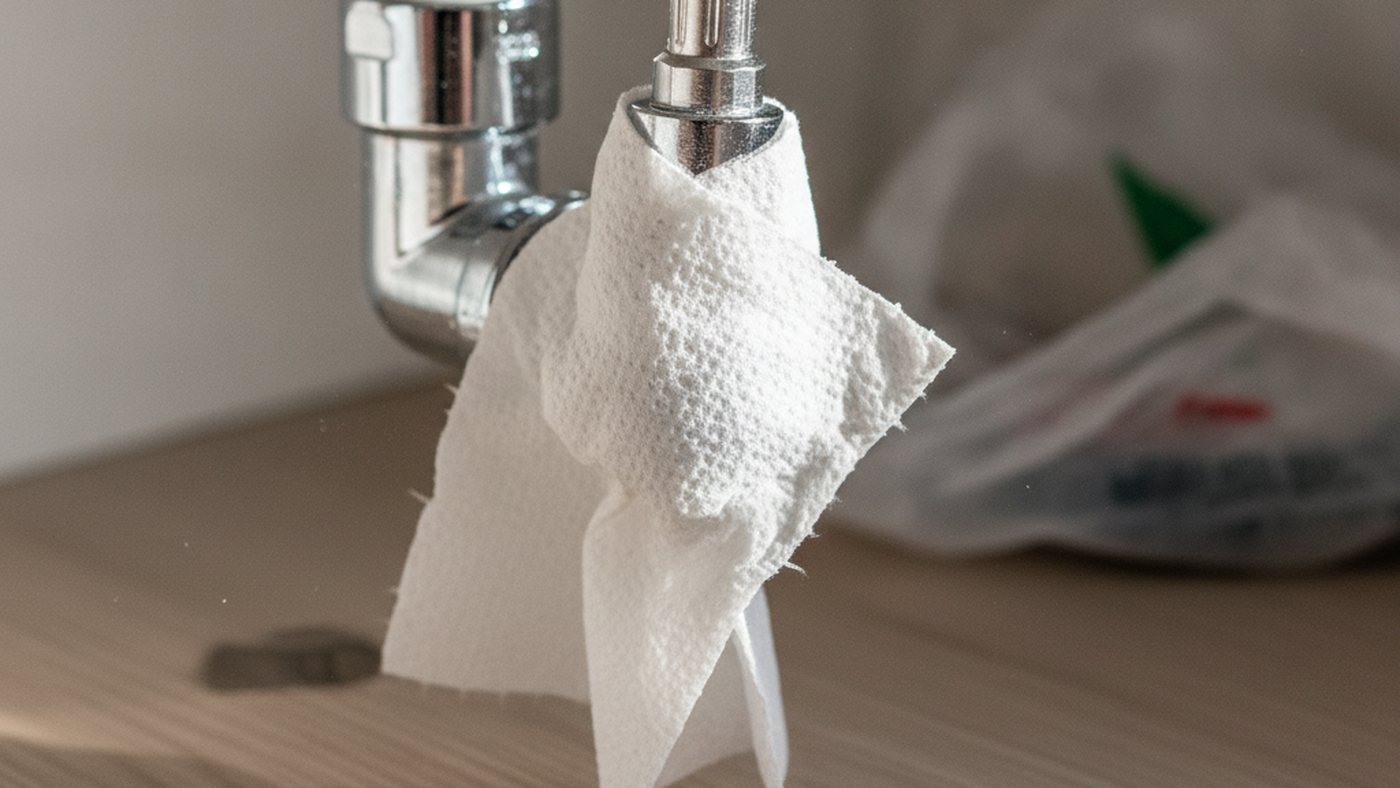
Empty the cabinet, grab a flashlight, and dry every pipe, nut and hose with a towel. Lay a sheet of dry paper towel flat on the cabinet floor and wrap small strips around each joint you can reach. Then work through the sink one system at a time:
- 1Do nothing for ten minutes. Leave the faucet off. If a strip gets wet now, the leak is on the supply side, which is under pressure all the time.
- 2Run the faucet with the drain open. Water that appears only now is coming from the drain joints or the faucet.
- 3Fill the basin, then pull the plug. A full basin puts weight on the seal under the sink strainer, which a running faucet does not.
- 4Run the disposal, then the dishwasher. This isolates their connections from everything else.
The first strip that darkens is your answer.
Drain Leaks: Slip Nuts, the P-Trap and the Sink Strainer
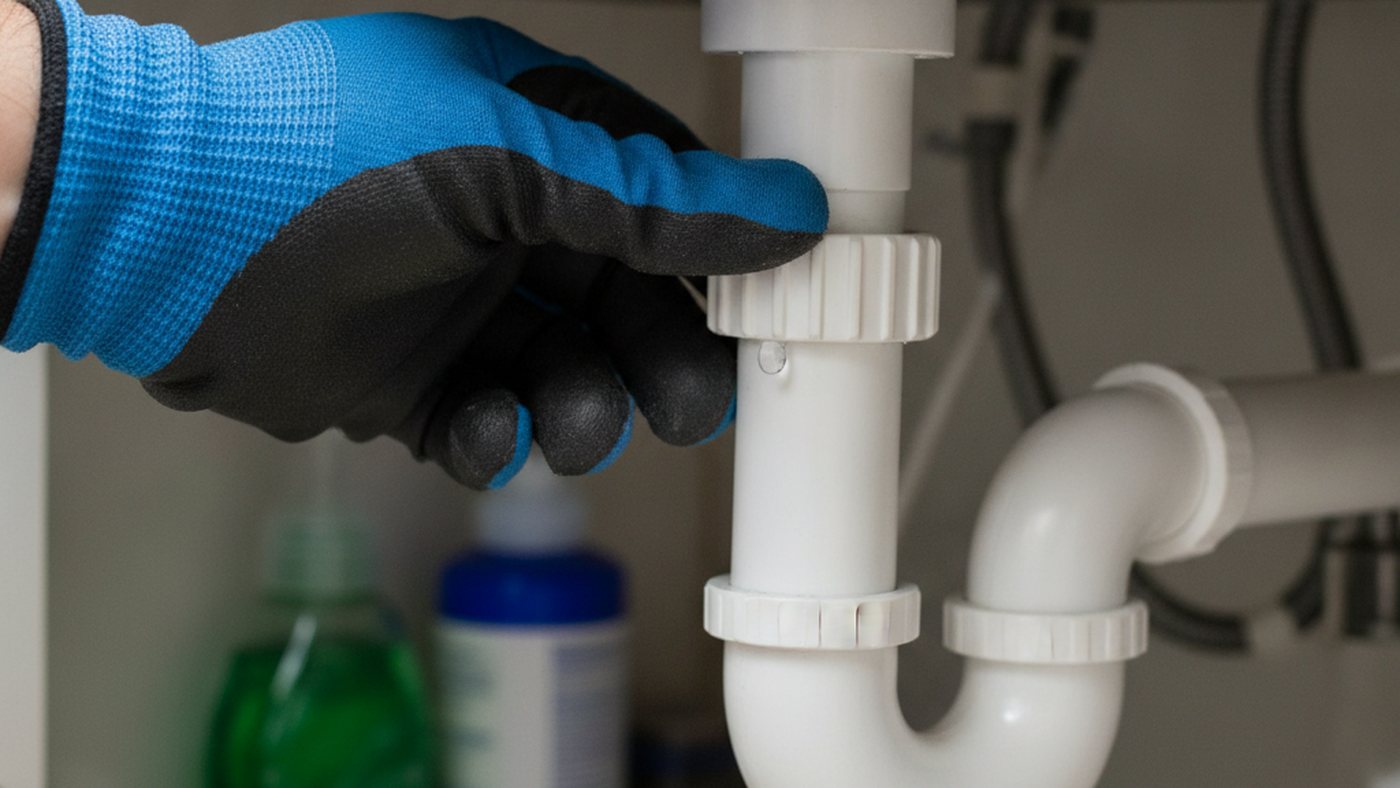
If the cabinet only gets wet while water is draining, look at the drain. The curved P-trap is held together by plastic slip nuts with a washer inside each one, and those nuts work loose as pipes get bumped by cleaning supplies and trash cans.
Hand-tighten a dripping slip nut about a quarter turn and test again. Do not put a wrench on plastic nuts; they crack. If the joint still drips after a snug hand tightening, the washer is worn or the pipes are slightly out of line, and the joint needs to come apart and be reset.
Water at the very top of the drain, right under the sink bowl, that shows up mostly when a full basin empties, points to the strainer. The seal between the strainer and the sink has let go, and the strainer has to be removed and re-sealed.
Supply Lines and Shutoff Valves: The Leaks That Never Stop
A leak that shows up while nobody is using the sink is on the supply side, and it deserves the most urgency because it runs around the clock. Check three spots on both the hot and cold side: where the flexible line meets the shutoff valve, where it meets the faucet, and the valve stem just under the handle.
Braided supply lines that are bulging, kinked or showing rust spots should be replaced rather than tightened. Turn the shutoff valve clockwise to stop the water while you work out what to do. If a valve will not close, or keeps weeping once it is closed, shut off the whole house. Our guide to shutting off your main water valve shows where it usually is in a Hillsboro home.
The Faucet Itself
Some sink leaks start above the counter. Water that pools around the faucet base can seep through the mounting hole and run down underneath, and a pull-down sprayer hose can wear through inside the cabinet and leak only while the faucet is running. Pull the sprayer out and look along the hose while the water is on.
Drips at the spout are worth fixing too, even when they stay in the sink. According to EPA WaterSense, "old and worn faucet washers and gaskets frequently cause leaks in faucets," and a faucet dripping once per second can waste more than 3,000 gallons a year. When a faucet is leaking from more than one place, replacing it is often simpler than rebuilding it, and that is routine fixture installation work.
Garbage Disposal and Dishwasher Connections
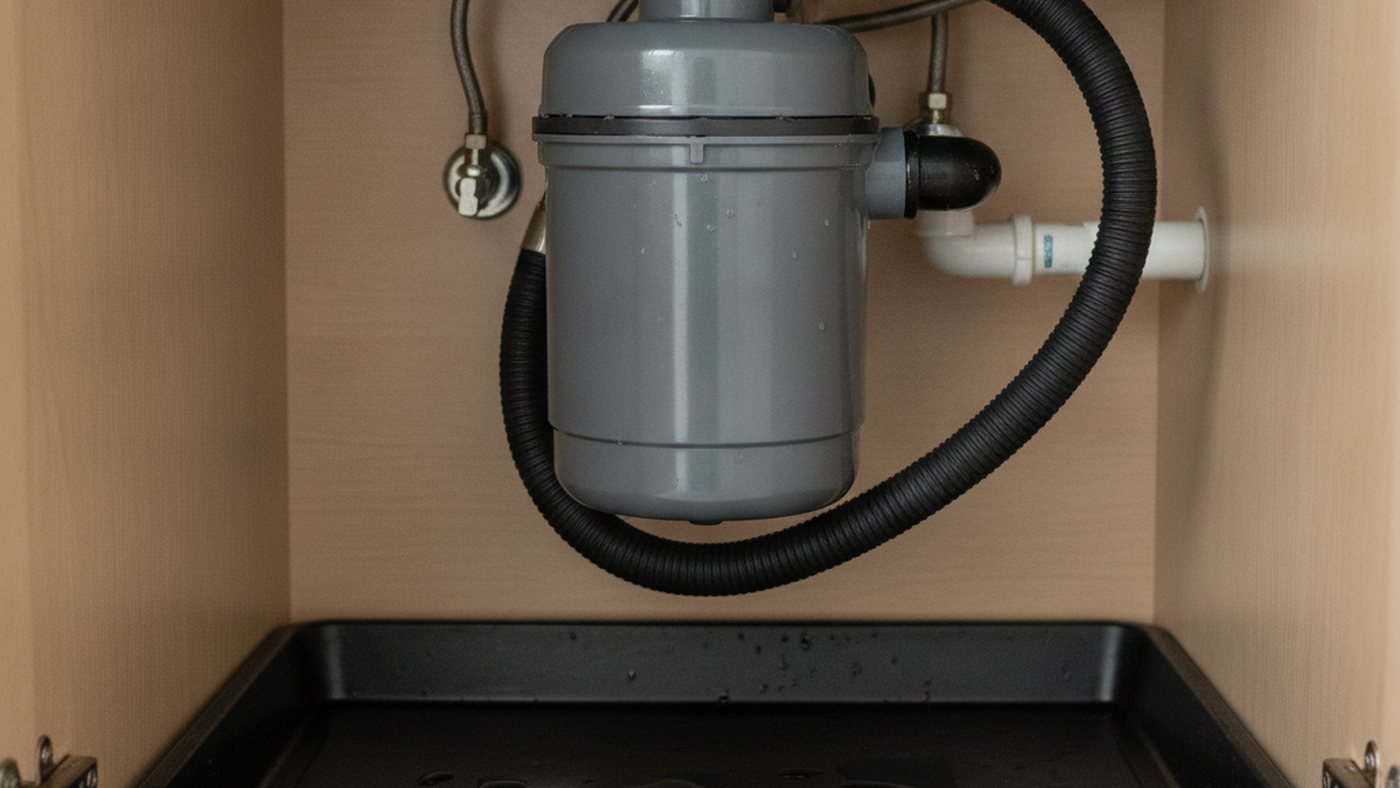
Switch off the power to the disposal before you touch it. Then look at where the water is coming from:
- Top of the disposal: the sink flange seal has loosened or failed.
- Side: the dishwasher drain hose clamp or the disposal's drain outlet gasket.
- Bottom of the disposal body: an internal seal has failed. That unit generally needs to be replaced rather than repaired.
Why a Slow Drip Matters More in a Crawl-Space House
Many homes around Hillsboro and the rest of Washington County sit over a crawl space rather than a slab. That means water that gets past the cabinet floor does not pool where you can see it. It soaks into the subfloor and drips into a space nobody visits.
Signs it has been going on a while: a cabinet floor that is swollen, soft or peeling, a musty smell when you open the doors, or a stain on the underside of the subfloor when you shine a flashlight up from the crawl space below the kitchen. If the wood is damp but you cannot find a drip in the cabinet at all, the leak may be inside the wall behind it. Our guide to finding a hidden water leak walks through the meter test that confirms it.
When to Call a Plumber
A hand-tightened slip nut is a homeowner fix. Most of the rest is not: a cracked trap, a strainer that needs re-sealing, a leaking disposal body, a shutoff valve that will not close, or water that has already reached the subfloor.
SKS Plumbing handles kitchen plumbing across Hillsboro and Washington County, seven days a week from 8am to 9pm. If you have traced the leak and it is not something a quarter turn will fix, call (503) 319-9348.
Frequently Asked Questions
Because the leak is on the drain side, which only carries water while the sink is draining. The usual culprits are a loose slip nut on the P-trap, a worn washer inside one of those joints, or a failed seal under the sink strainer where the drain meets the bowl. A pull-down sprayer hose that has worn through can also leak only while the faucet runs.
The hot and cold supply lines are under pressure all the time, so a leak there keeps going whether or not the sink is in use. Check where each line meets the shutoff valve and the faucet, and check the valve stem under its handle. Turn both shutoff valves clockwise to stop the water until the connection is repaired.
Usually, yes. Hand-tighten the slip nut about a quarter turn and test again. Avoid putting a wrench on plastic nuts, because they crack. If the joint still drips after a snug hand tightening, the washer inside is worn or the pipes are out of line, and the joint needs to be taken apart and reset.
It depends on where the water comes from. Leaks at the sink flange on top or at the dishwasher and drain connections on the side are often fixable. Water dripping from the bottom of the disposal body usually means an internal seal has failed, and that unit generally needs to be replaced. Always switch off the power before touching a disposal.
Turn both shutoff valves under the sink clockwise until they stop. If a valve will not close or keeps dripping, close the main water shutoff for the house. Put a bucket or tray under the leak, dry the cabinet floor so the wood does not swell, and leave the valves closed until the leaking part is fixed.