
Key Takeaway
Portland metro homes are more vulnerable to frozen pipes than most homeowners realize. Close crawl space vents, disconnect hoses, let faucets drip, and keep your thermostat at 55+ degrees before any freeze event. If pipes burst, shut off your main water supply immediately and call (503) 319-9348.
Hillsboro and the greater Portland metro area do not experience the sustained deep freezes common in the Midwest or Northeast. But that relative mildness creates a dangerous complacency. When cold snaps do hit, and they hit every few years with temperatures dropping into the teens or single digits, Portland metro homes are less prepared than homes in colder climates. Pipes are not buried as deep. Crawl spaces are not as well insulated. Exterior walls in many homes lack the insulation depth found in cold-climate construction. The result: burst pipes, flooding, and thousands of dollars in water damage during events that last only 2 to 5 days.
This guide covers which pipes are most vulnerable in Hillsboro homes, what you can do before a freeze event, and what to do if you suspect pipes have already frozen.
Why Portland Metro Homes Are Vulnerable
Homes built for the Portland metro climate are designed primarily to handle rain and moisture, not sustained freezing temperatures. Building codes in Oregon have historically required less insulation in exterior walls and crawl spaces than codes in colder states. Pipes are often routed through unheated spaces that stay above freezing during a normal Oregon winter but drop below 32 degrees during cold snaps.
Specific vulnerabilities in Hillsboro homes include:
Crawl space pipes. Most Hillsboro homes have crawl space foundations. Supply lines running through the crawl space are exposed to outside air that enters through foundation vents. During normal winter weather, crawl space temperatures stay above freezing. During a cold snap with temperatures in the teens, crawl spaces can drop well below freezing, especially if foundation vents are open.
Exterior wall pipes. Supply lines running through exterior walls, common for kitchen sinks on outside walls and bathroom fixtures on exterior walls, have minimal insulation between them and the outside temperature. These pipes are among the first to freeze during cold events.
Hose bibs. Standard (non-frost-proof) exterior faucets have the shutoff mechanism at the exterior wall surface, exposing the valve and a short section of pipe to outside temperatures. These freeze readily in any sub-freezing weather.
Garage pipes. Water heaters, laundry connections, and supply lines in unheated garages are vulnerable during sustained freezing. Garages provide some protection from wind but little thermal insulation.
Attic pipes. Some homes, particularly those with upstairs bathrooms, have supply lines routed through the attic. Attics lose heat rapidly and can reach outside ambient temperature within hours of a heating system failure or sustained cold.
The Damage Frozen Pipes Cause
Water expands approximately 9 percent when it freezes. This expansion generates enormous pressure inside a closed pipe. That pressure is enough to split copper, burst PEX, and crack galvanized steel. The failure does not always occur at the point where ice forms. Often, the ice plug creates a pressure buildup between the plug and a closed faucet, and the pipe fails at its weakest point, which may be several feet from the actual ice location.
The burst itself is not where the major damage occurs. The catastrophic damage happens when the ice thaws. While the pipe is frozen, the ice plug actually prevents water from flowing through the burst. But once temperatures rise and the ice melts, pressurized water sprays through the rupture continuously until someone discovers it and shuts off the water supply. If you are at work, asleep, or away from home when the thaw occurs, water can flow unchecked for hours, flooding floors, saturating walls, destroying ceilings, and causing mold growth that requires extensive remediation.
Prevention Steps Before a Freeze Event
Immediate Actions (24 to 48 Hours Before Freezing Temperatures)
Close crawl space vents. If your foundation vents have operable covers, close them before freezing weather arrives. This traps warmer air in the crawl space and significantly reduces the risk of pipe freezing. Open them again once temperatures return above freezing to prevent moisture buildup.
Disconnect garden hoses. A hose left connected to a hose bib traps water in the faucet body and the short pipe section behind it. Disconnect all hoses and drain them. If you have a shutoff valve inside the house that feeds the exterior faucet, close it and open the exterior faucet to drain the remaining water.
Open cabinet doors. For kitchen sinks and bathroom vanities on exterior walls, open the cabinet doors to allow heated room air to reach the pipes behind the cabinet. This simple step can prevent freezing in marginally cold conditions.
Let faucets drip. For fixtures served by pipes running through vulnerable areas (exterior walls, crawl spaces), let the faucet drip slowly on both the hot and cold sides. Moving water resists freezing, and the slight flow relieves pressure buildup that causes bursts even if ice does form.
Set your thermostat. Do not lower your thermostat below 55 degrees during freezing weather, even if you are away from home. The heat radiating through floors and walls keeps interior pipe temperatures above freezing. If you are leaving for vacation during winter, 55 degrees is the minimum safe setting.
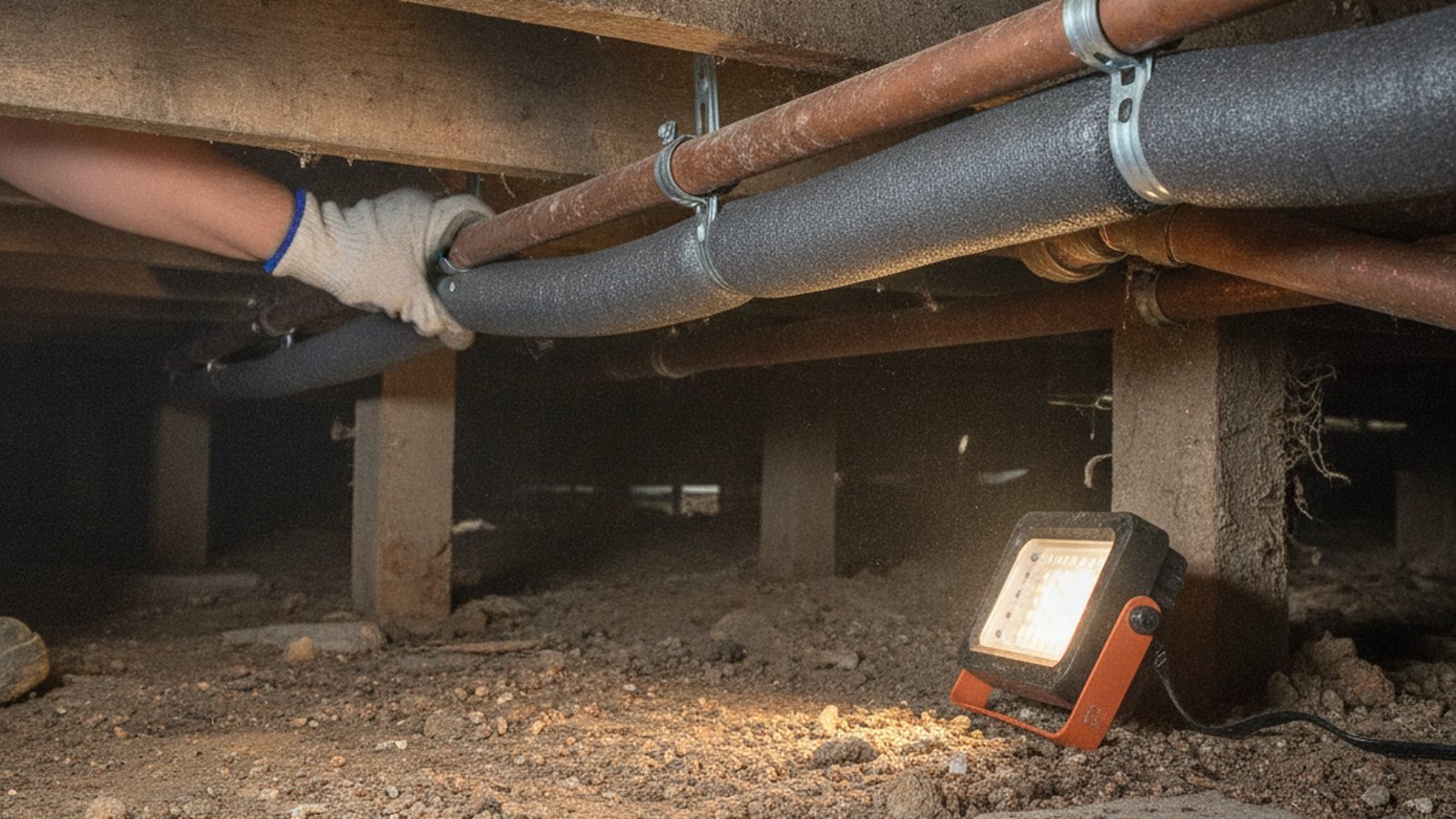
Insulate exposed pipes. Pipe insulation foam (available at any hardware store) provides meaningful protection for exposed pipes in crawl spaces and garages. It will not prevent freezing during extended extreme cold, but it significantly extends the time pipes can withstand sub-freezing temperatures before ice forms.
Long-Term Preventive Upgrades
Install frost-proof hose bibs. A frost-proof hose bib extends through the wall with the actual shutoff valve located 6 to 12 inches inside the heated space. The water stops at the warm interior, eliminating freeze risk at the exterior faucet regardless of outside temperature. This is a permanent solution that eliminates the need for seasonal winterization of exterior faucets.
Insulate crawl space pipes. Professional pipe insulation with heat tape on the most vulnerable runs provides reliable freeze protection for crawl space plumbing. Heat tape uses a thermostat to activate an electric heating element when temperatures approach freezing, keeping pipes warm without manual intervention.
Seal crawl space air leaks. Beyond closing vents, sealing gaps around the foundation perimeter, around pipe penetrations, and at the rim joist area reduces cold air infiltration into the crawl space. This benefits both freeze prevention and overall home energy efficiency.
Reroute vulnerable pipes. If you have pipes in exterior walls that freeze repeatedly, rerouting them through interior walls eliminates the vulnerability permanently. This is most cost-effective when done during a remodel that already involves opening walls.
Upgrade to PEX. While no pipe material is immune to freezing, PEX has more flexibility than copper or galvanized steel. PEX can expand slightly with ice formation without immediately bursting, though it will still fail under extreme conditions. If you are repiping your home, PEX in vulnerable locations provides an additional margin of safety.
What to Do If You Suspect Frozen Pipes
Signs of Frozen Pipes
- A faucet produces no water or only a trickle when opened
- Multiple fixtures on the same wall or in the same area have no flow
- You hear no water running in the pipes when a faucet is opened
- Visible frost on exposed pipes in the crawl space or garage
- A bulge or distortion visible on an exposed pipe section
If Pipes Are Frozen But Not Yet Burst
If you discover frozen pipes before they have burst, you may be able to thaw them safely. Open the affected faucet to allow water to flow once the ice melts and to relieve pressure. Apply gentle heat to the frozen section using a hair dryer, heat lamp, or warm towels. Never use an open flame, propane torch, or high-heat device. These can damage the pipe, ignite nearby materials, or cause steam pressure that bursts the pipe.
Work from the faucet end toward the frozen section so melting water can flow out through the open faucet. If you cannot locate the frozen section or cannot access it safely, call a plumber.
If Pipes Have Already Burst
If you discover a burst pipe, whether actively spraying water or showing signs of a rupture, shut off your main water supply immediately. The main shutoff valve is typically located where the water line enters your home, often in the garage, utility closet, or crawl space. If you cannot find or operate the interior shutoff, use the shutoff at the water meter near the street.
Once water is shut off, call SKS Plumbing at (503) 319-9348 for emergency repair. We handle burst pipe repairs throughout Hillsboro and surrounding areas with same-day service available 7 days a week. Our technicians carry the fittings and materials needed to repair burst pipes in a single visit.
When to Call a Professional
Call a plumber before a freeze event if you want frost-proof hose bibs installed, crawl space pipes insulated with heat tape, or vulnerable pipe runs rerouted to protected locations. These preventive measures are best completed in fall before freezing weather arrives.
Call a plumber during or after a freeze event if pipes have burst, if you cannot thaw frozen pipes safely, if you are unsure whether pipes have been damaged, or if you discover water damage after a thaw.
SKS Plumbing LLC provides both preventive outdoor plumbing winterization and emergency freeze damage repair across Hillsboro, Beaverton, Forest Grove, North Plains, and all surrounding communities. Call (503) 319-9348 to schedule preventive service or request emergency repair. We are available 7 days a week from 8am to 9pm.
Frequently Asked Questions
Pipes become vulnerable when outside temperatures drop below 20 degrees Fahrenheit for more than a few hours. Crawl space pipes and exterior wall pipes can freeze at slightly higher temperatures due to wind chill and lack of insulation.
Signs include no water or only a trickle from faucets, no sound of running water when taps are open, visible frost on exposed pipes, and multiple fixtures losing flow simultaneously.
Yes. Let both hot and cold faucets drip slowly for any fixtures served by pipes in exterior walls or crawl spaces. Moving water resists freezing and relieves pressure that causes bursts.
Shut off your main water supply immediately. The shutoff valve is typically where the water line enters your home, often in the garage, utility closet, or crawl space. Then call SKS Plumbing at (503) 319-9348 for emergency repair.
Burst pipe repair costs vary based on location and accessibility. SKS Plumbing provides upfront pricing before starting any work. Call (503) 319-9348 for a same-day assessment.